
Clarify symptom pattern, onset, triggers and daily impact
Non-invasive pelvic wellness
A stronger foundation for control, function and confidence.
The male pelvic floor supports bladder control and sexual function. Chair-based magnetic stimulation may be considered for selected adults as part of a wider plan.
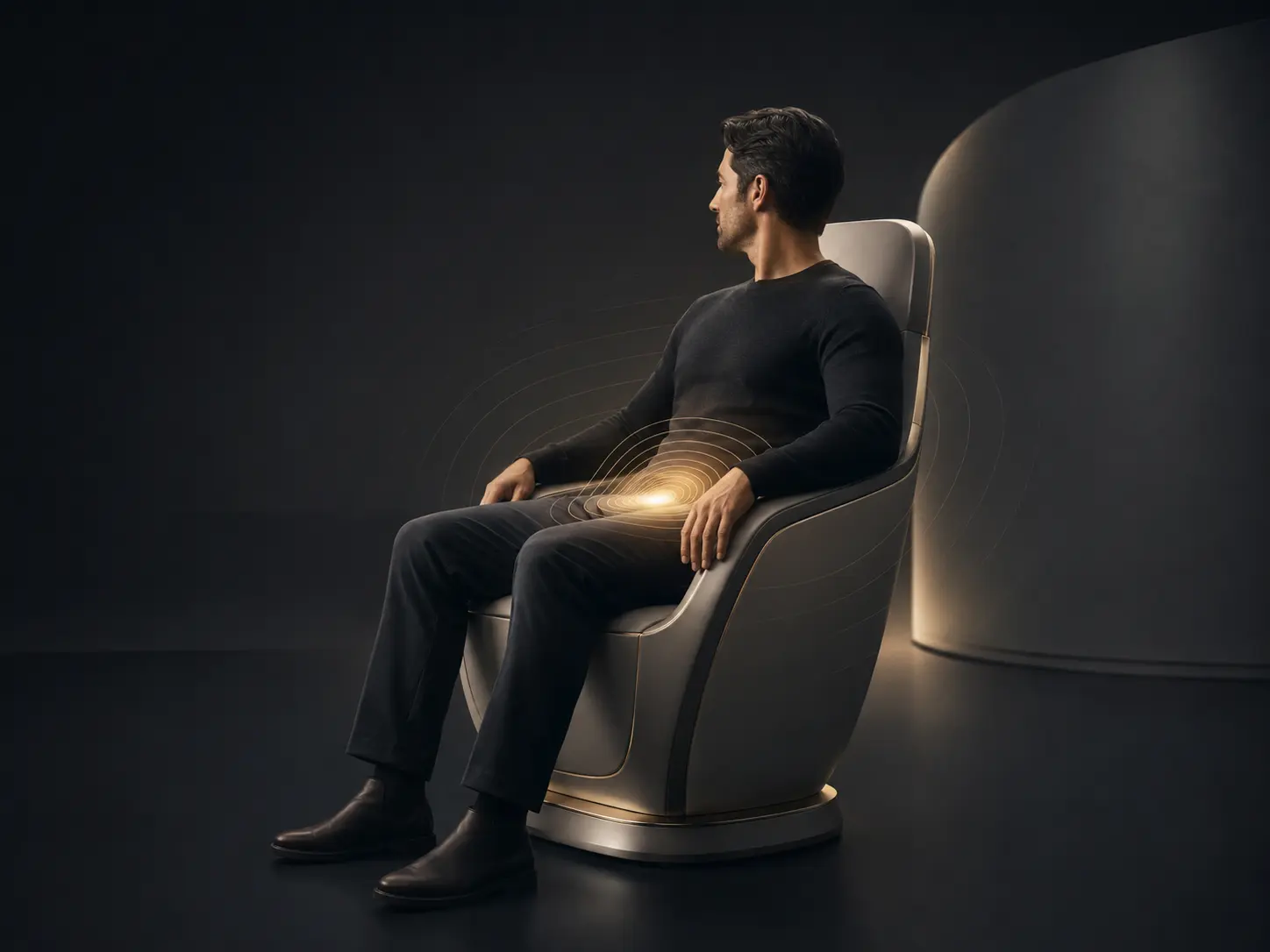
01 · Assessment before recommendation
Understand first
Pelvic symptoms are common. The right plan starts by identifying what they mean.
Chair-based devices—often known by brand names such as Emsella—use electromagnetic stimulation to trigger pelvic floor contractions while the patient remains clothed. This is not a substitute for diagnosis.
01
Urinary leakage during coughing, lifting or exercise
02
A frequent or urgent need to urinate
03
Pelvic weakness after prostate treatment
04
Difficulty identifying or consistently training the pelvic floor
Your first appointment
A thoughtful assessment, not a rushed sales pitch.
Review urinary, prostate, neurological and surgical history
Screen for red flags requiring investigation or referral
Discuss training, device evidence, contraindications and goals
Personalised care map
Options matched to the cause, evidence and your priorities.
Guided training
Learning the correct muscles is foundational. A trained clinician or physiotherapist can help avoid compensation.
Chair-based stimulation
Electromagnetic stimulation may help selected patients as an adjunct. Protocol, comfort and response vary.
Bladder strategies
Fluid timing, bladder habits, constipation management and tracking may support a broader plan.
Specialist care
Persistent pain, blood in urine, neurological symptoms or severe leakage can require urology referral.
Who should speak to a clinician?
Book an assessment if any of these sound familiar.
- ✓The change is persistent, recurring or getting worse
- ✓You want an objective assessment before spending on treatment
- ✓The concern is affecting confidence or daily wellbeing
- ✓You have tried products without understanding the diagnosis
- ✓You have other health symptoms or medicine changes
- ✓You want risks, maintenance and alternatives explained clearly
Questions, answered clearly
Frequently asked questions
What is an Emsella-style chair?+
A chair-based device that uses electromagnetic stimulation to produce pelvic floor contractions while a person remains clothed.
Is it proven for every male condition?+
No. Research varies by condition, device and study quality. Evidence does not support universal promises.
Does it replace pelvic floor exercises?+
Usually it is an adjunct, not a replacement for correct muscle control and medical assessment.
Who may not be suitable?+
Implanted electronic devices, certain metal implants and some active conditions may be contraindications. Clinical screening is required.
Private by design
You don't need the perfect words. Just tell us what changed.
Share the concern you want to discuss. A care coordinator can arrange the right consultation.
Editorial note
Educational content by the MYMENCARE editorial team. Final diagnosis and treatment decisions must be made by a registered practitioner. Updated 18 July 2026.